
Drug Discovery 2026: Meet the ELRIG Award Winners
Across the two days of Drug Discovery 2026, we recognised and celebrated the talented individuals and organisations advancing the industry. From community contribution to early-stage innovation, sustainability, early career impact and poster science.
Here is a look at this year’s winners and their work:
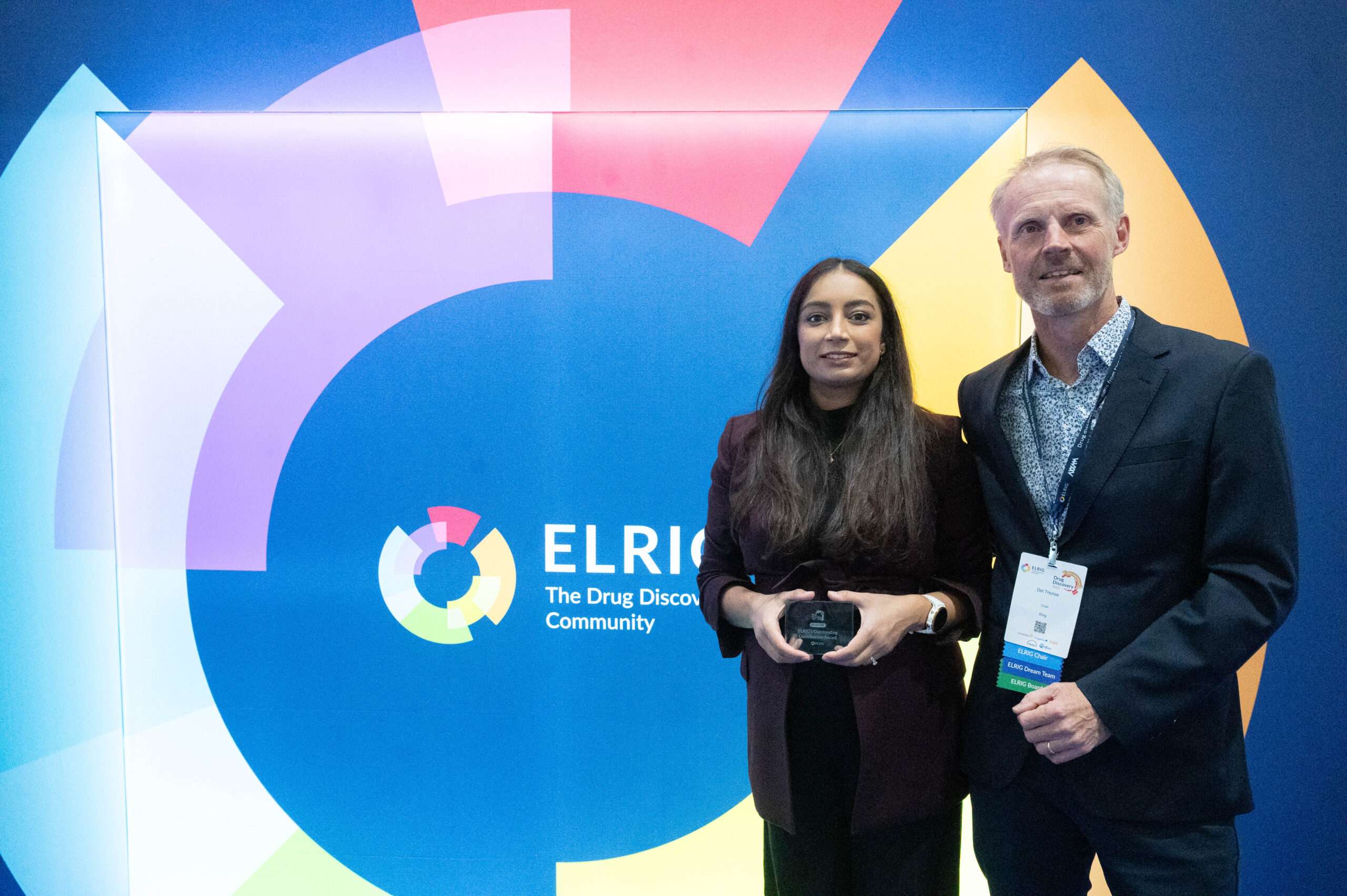
ELRIG Outstanding Contribution Award: Saleha Patel
The ELRIG Outstanding Contribution Award recognises an individual who has gone above and beyond in their contribution to ELRIG and the wider community.
More about the award winner
ELRIG Chair Del Trezise presented this year’s award to Saleha Patel, who has just completed her term on the ELRIG board as science director.
Patel studied biochemistry at York and worked at Cancer Research UK’s London Research Institute during her master’s degree. She went on to a PhD and a postdoctoral position in collaboration with UCB, then moved into pharma at AstraZeneca. In her first week there, then-department head and former ELRIG chair Steve Rees asked for volunteers to help with networking events in the North West.
“That’s how I started volunteering with ELRIG and I didn’t really escape since.” Saleha Patel
Patel went on to chair the networking events work group with ELRIG, which later merged with the scientific strategy work group to form today’s science strategy work group. She joined the board as an early career professional and then became science director. Under her leadership, ELRIG grew from a community of around 10,000 people focused mainly on early drug screening, robotics and automation into one covering all aspects of drug discovery. She also helped make the community globally accessible, taking science from the UK to the United States, Asia and Europe.
“Nothing is left to chance in ELRIG. And I think the program is deliberately designed to be inclusive.” Saleha Patel
Her advice to early career professionals was to make the most of events like Drug Discovery, talk to as many people as possible (including senior leaders), visit the posters and get involved.
“You absolutely have no idea where those opportunities come from.” Saleha Patel
Sustainability Awards
The first ELRIG Sustainability Awards were introduced by Rob Howes, Sustainability Work Group Leader. Entrants submitted short videos describing their work, and the number of submissions in the first year was a pleasant surprise. Howes framed the goal of the work group clearly:
“The challenge isn’t to do less science. The challenge is, can we do the same or better science with less environmental impact?” Rob Howes
Organisation award: My Green Lab
More about the award winner
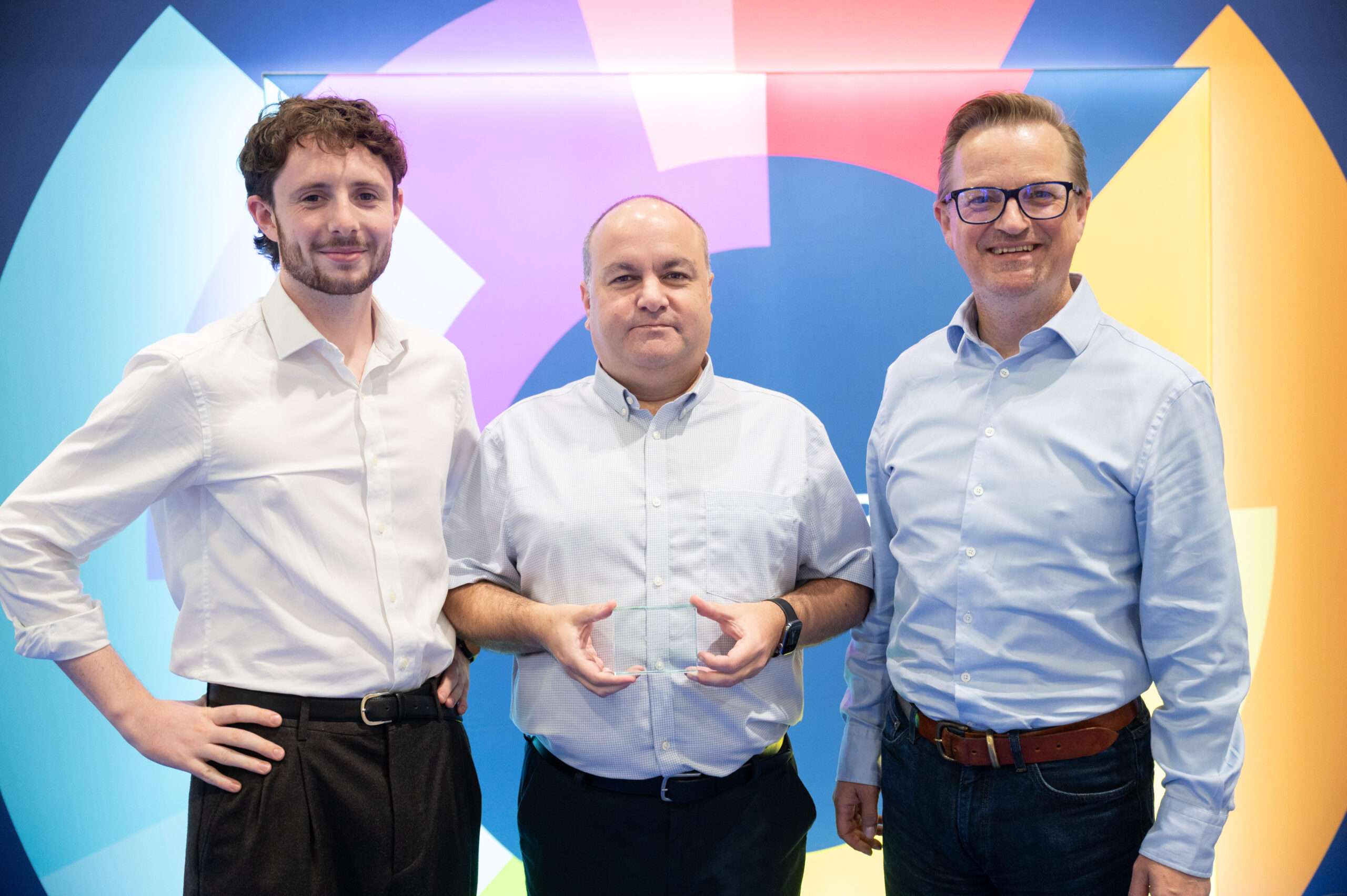
My Green Lab, accepted by Megan Petsen, was recognised for helping move sustainability from good intentions into everyday laboratory practice, providing a practical framework through which labs can assess, improve and continually reduce their environmental impact. The prize included a complimentary two-day exhibition booth.
Individual award: Rhys Fox, AstraZeneca
More about the award winner
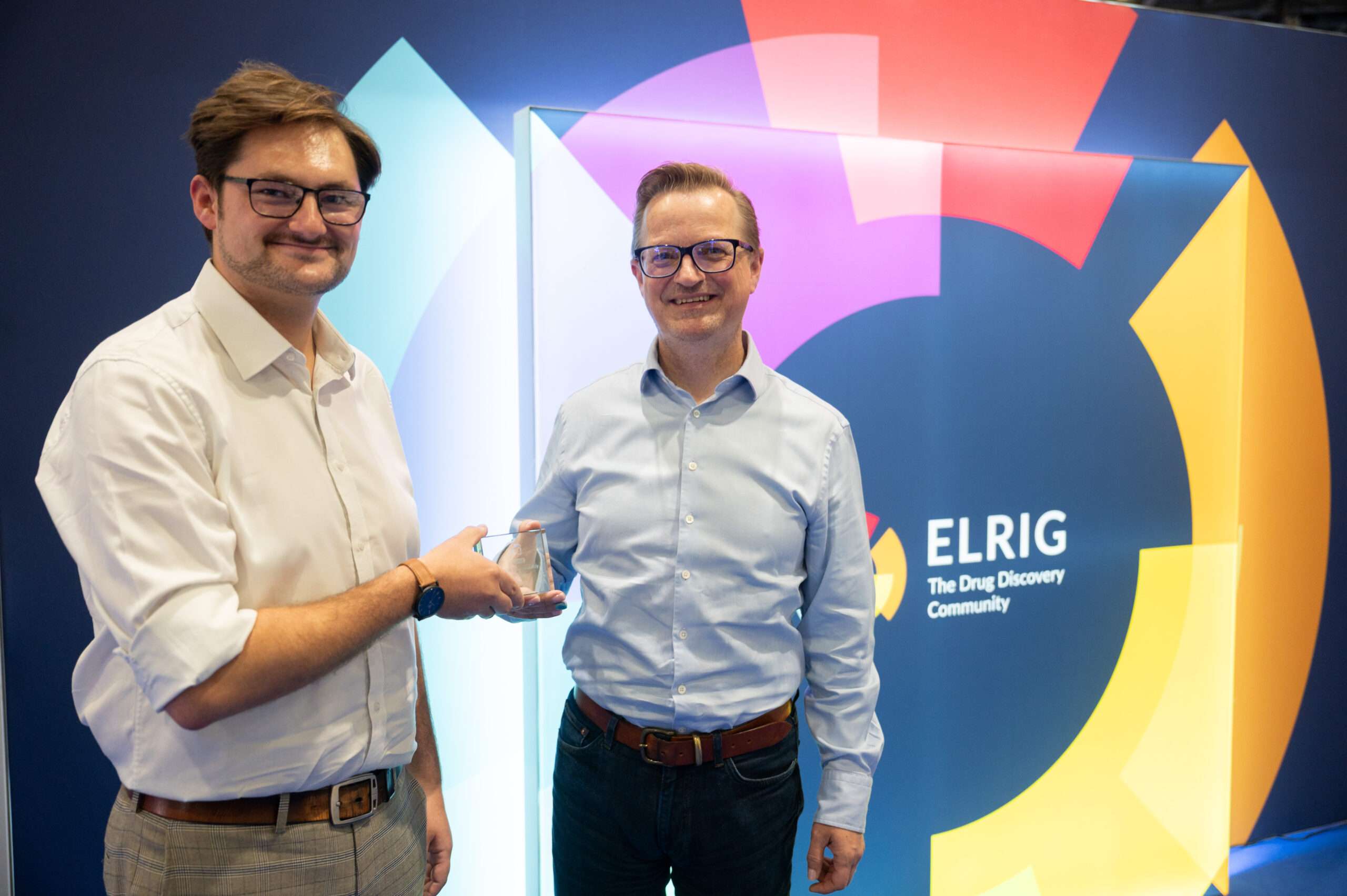
Rhys Fox, Senior Scientist in the Global Cell Bank at AstraZeneca in Cambridge, won the individual award for showing that meaningful change doesn’t always require a major corporate programme. It can start with one person questioning how we work, finding a better approach and inspiring others to follow, which is exactly the culture of practical, grassroots sustainability ELRIG wants to encourage across the life-sciences community. His project asked whether fetal bovine serum (FBS) in routine 2D cell culture could be reduced without compromising the science.
The team first tried to remove FBS altogether. They evaluated 37 alternatives, shortlisted six and found no single replacement that worked consistently across their diverse cell models. They then reframed the question around reduction and compared growth at 5% and 10% FBS across 72 cell lines (65 of them unique) over up to five passages. Most lines showed excellent agreement, and none showed differences that stopped the work progressing. Assay window, variability and compound potency were also checked. Since February, the change has saved just over 53 litres of FBS.
“For decades, 10% has always been treated as a default, but our data suggests that 5% has been sufficient for a lot of our models.” Rhys Fox
Fox acknowledged that the approach won’t suit every assay or cell model, but encouraged other labs to try it, since small reductions across many laboratories could add up.
Early Career Professional Awards
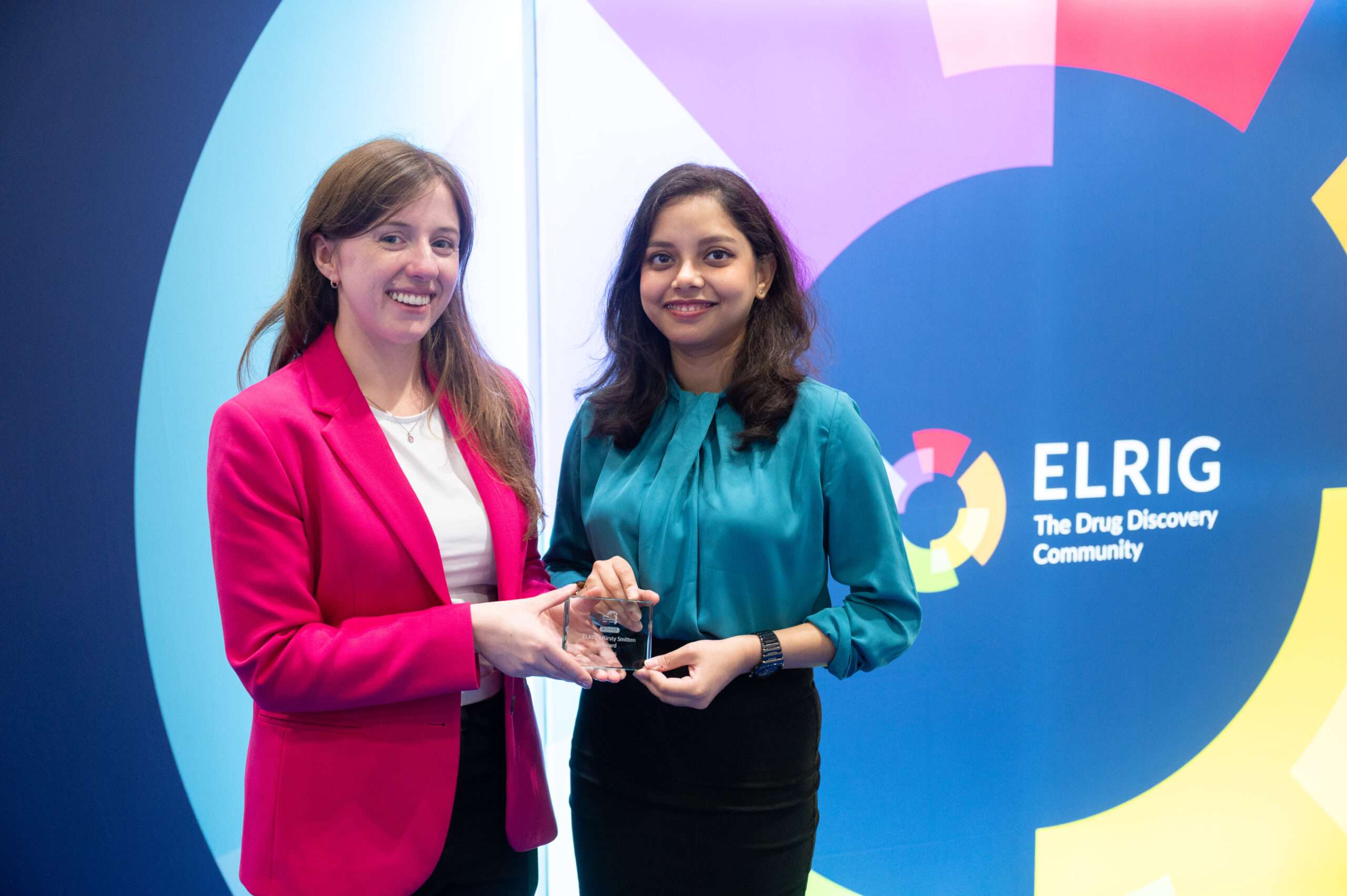
Kirsty Smitten Award: Dishaa Sinha
More about the award winner
Presented by Elaine Duncan, chair of the ELRIG Early Career Professional (ECP) Work Group, the Kirsty Smitten Award honours early career professionals who go above and beyond to drive impactful science, technological development and philanthropic contributions. Kirsty Smitten won the award herself, when it was known as the ECP Impact Award, for her work in antimicrobial resistance, which led her to co-found a spin-out company based on her PhD research. The award was renamed in her honour following her death in 2023.
This year’s winner is Dishaa Sinha, a DPhil student at the University of Oxford researching biomarkers for Alzheimer’s disease. Her research covers longitudinal biological markers, blood-based biomarkers and speech measures, with a focus on scalable approaches to early detection. Alongside her studies, she has worked within the FAST Brain Health Study team, a large UK multicentre programme, leading site set-up and coordination across more than 30 sites and running Site Initiation Visits. Her work has been recognised with the 2025 Women in Neuroscience UK Research Support Award and a University of Oxford Excellence Award in 2024.
Sinha is also committed to public engagement. She has spoken about dementia within the Sikh community in Wolverhampton, translating talks and providing information in Hindi to make it more accessible.
“Effective translation ultimately means meeting communities where they are.” Dishaa Sinha
In her talk, Sinha set out two linked challenges: detecting subtle biological changes before symptoms appear, and helping people recognise early signs beyond normal ageing while overcoming stigma and fear. Globally, the average time from first symptoms to diagnosis is 3.5 years, and 75% of people living with dementia remain undiagnosed, rising to over 90% in low- and middle-income countries. The topic is personal for her: she lost her grandmother to glioblastoma, when gradual changes in her health were initially put down to normal ageing.
“The ultimate goal is not simply to be able to detect Alzheimer’s disease earlier. It is to build scalable pathways that can actually reach and benefit people.” Dishaa Sinha
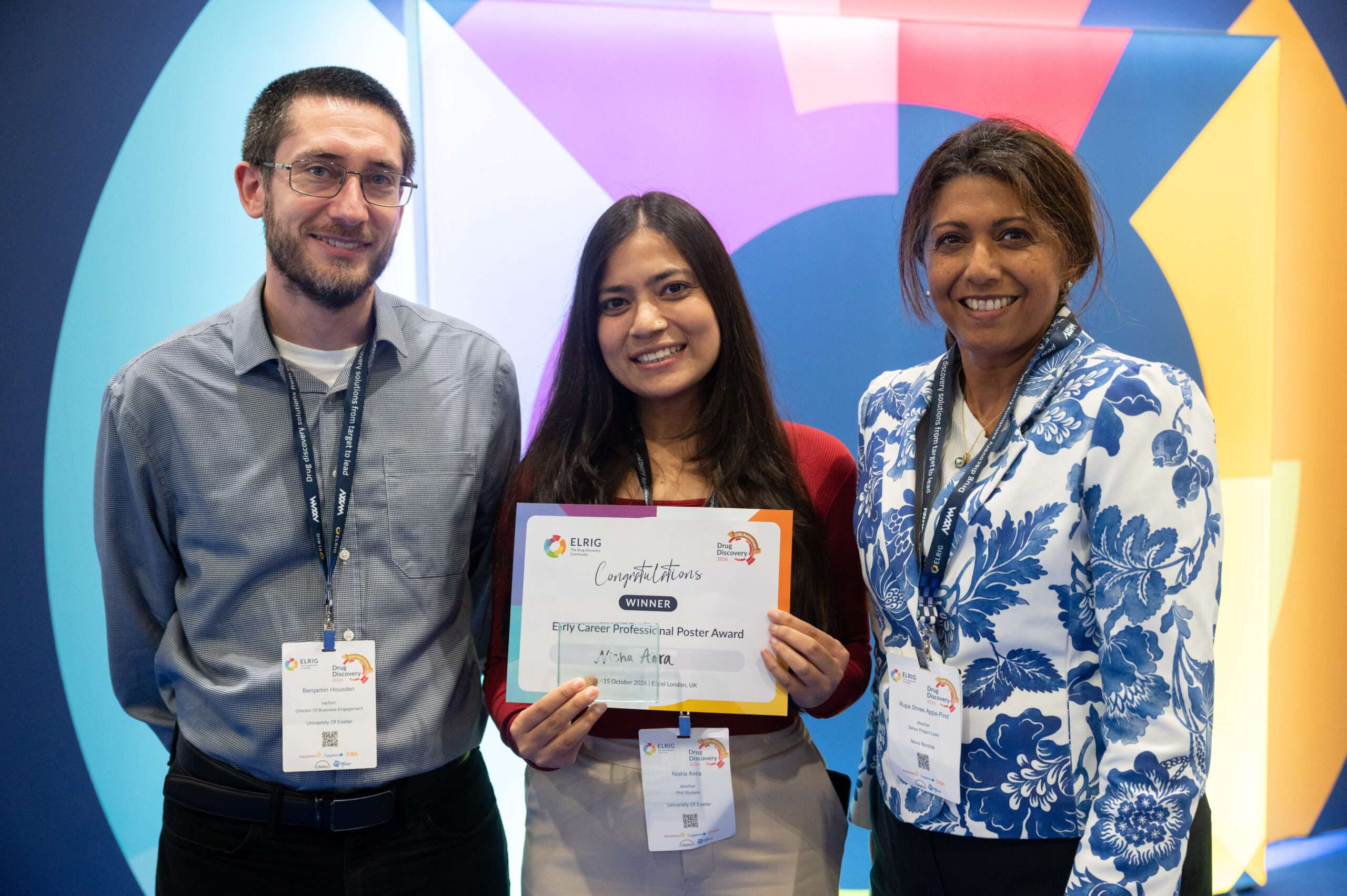
Poster Award: Nisha Ara
More about the award winner
Rupa Shree Appa-Pind (Novo Nordisk), on behalf of the ELRIG conference directors, presented the poster award, which recognises the science shared on posters throughout the exhibition hall. Voted for by our poster judging team, it went to Nisha Ara, who received an award at the ELRIG hub.
“It’s fantastic that you share your science with us all.” Rupa Shree Appa-Pind
Innovation Awards
The Breakthrough Zone supports emerging companies and has grown this year to 48 new companies, ranging from AI to more traditional drug discovery businesses. Lisa Mohamet presented two innovation awards on behalf of ELRIG’s innovation work group. The main award was sponsored by Mathys & Squire LLP, who provided the winner £15,000 of intellectual property support, as well as ELRIG refunding the winner’s booth.
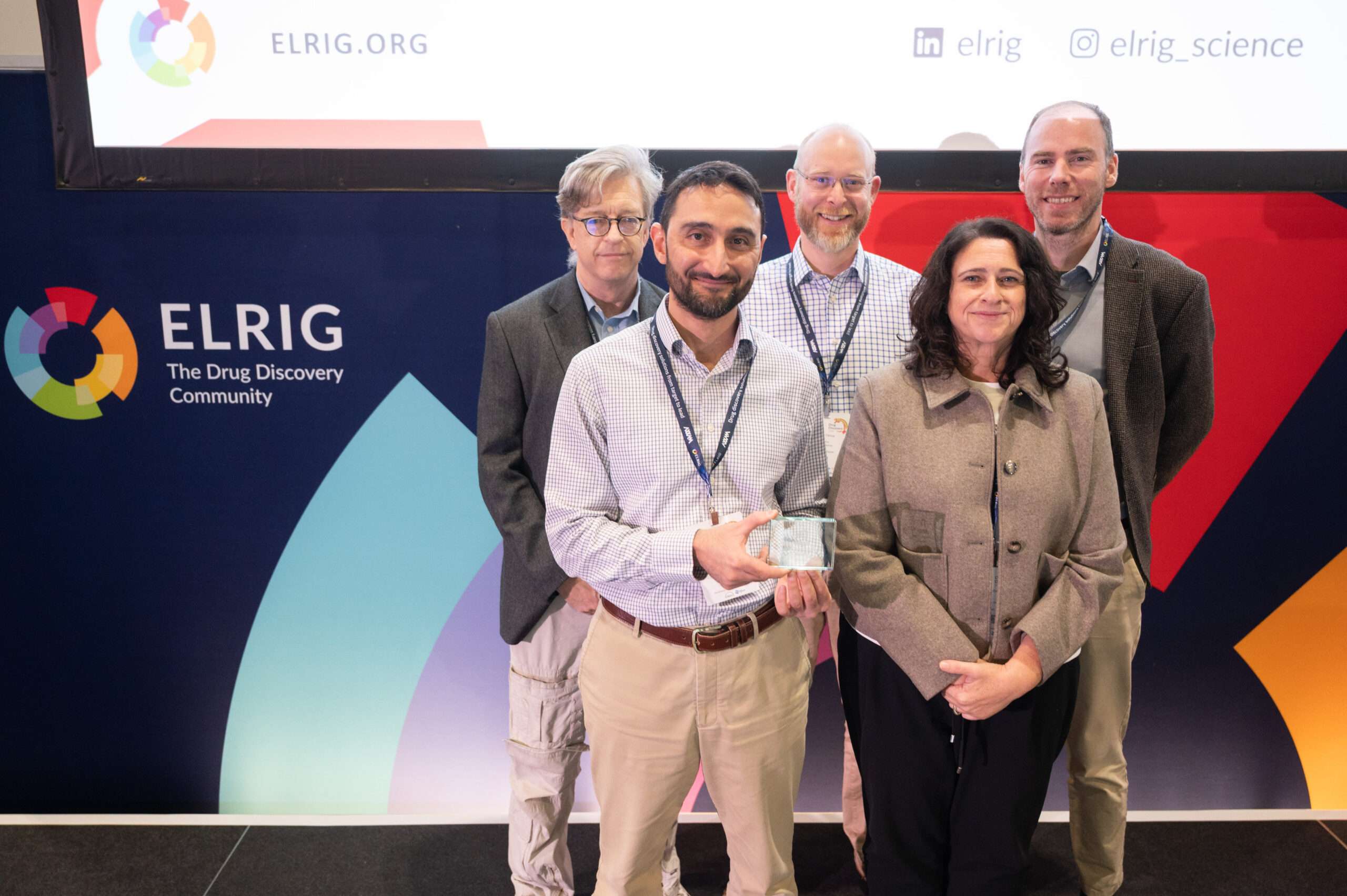
Innovation Prize: BioTryp Therapeutics
More about the award winner
The Innovation Prize went to BioTryp Therapeutics, a University of Cambridge spin-out supported by Cambridge Enterprise. Its CEO, Ashraf Zarkan, accepted the award and described it as a complete surprise. The company is developing an approach to inhibiting biofilms to tackle the growing problem of antibiotic resistance.
Bacteria form biofilms, protective communities that appear in up to 80% of bacterial infections and which many antibiotics cannot penetrate. Despite this, Zarkan noted, there are currently no antibiofilm treatments in the clinic.
“We have zero antibiofilms in clinic. And that’s where our science comes into place.” Ashraf Zarkan
BioTryp is developing an orally administered small molecule that prevents biofilm formation. It is not an antibiotic and does not kill bacteria. Instead, it is designed as an add-on to antibiotics, with a mechanism unrelated to antibiotic action and activity that isn’t restricted to a single bacterial species. The science began about 10 years ago in the laboratory of Dr David Summers at Cambridge, where large-scale computational screening of around 18 million compounds fed into molecules that were synthesised and tested. The company, led commercially by Dr Jehangir Cama, has completed hit-to-lead work and is now at lead selection, preparing its best compounds for animal testing.
BioTryp is starting with urinary tract infections, which affect 400 million people a year worldwide. Its plan is to take the programme through clinical trials and then partner or exit. The company is nearing the end of a funding round, plans a Series A to reach Phase 1, and is looking for investment and collaborators, particularly to help with preclinical development, the IND and the regulatory route beyond Phase 1.
“It took us 10 years to get here.” Ashraf Zarkan
People’s Choice Innovation Award: Peapod Bio
New for 2026, the People’s Choice Innovation Award was voted for by the ELRIG community. With 1728 votes, the winner was Peapod Bio, a Chicago-based company whose approach to high-throughput assay development is changing the speed and quality of the CRO support it can offer its customers. CEO and founder Zachary Gurard-Levin accepted the award on the company’s behalf.
This article has been supplemented by information produced by Lorefully, an AI and knowledge capture company, who recorded the award presentations at Drug Discovery 2026. The article has been reviewed by the ELRIG team and the award judges before publication to ensure the the content is accurate.
