Beyond the Lab: Careers Translating Science into IP and Business Strategy
Beyond the Lab: Careers Translating Science into IP and Business Strategy
*If the webinar does not appear, please ensure you have accepted the “Experience” cookies for this website. Alternatively, you can view it directly on YouTube here.
Scientific training opens doors well beyond the laboratory. That was the message of a recent ELRIG Early Career Professional (ECP) webinar, which brought together four professionals who have built careers at the intersection of science, law, and business.
The panellists
Dr Melvin Ansell — Patent Attorney, Sagurna Melvin completed a PhD in chemistry before moving into patent law. He now works as a UK and European patent attorney, protecting pharmaceutical innovations. He pointed to skills developed during his PhD — particularly problem-solving and clear communication — as directly useful in his current work.
Elizabeth Crawford — Senior Business Development Manager, iCON Elizabeth’s background is in pharmacology. Her career has included technology transfer roles and a stint as CEO of a digital health spin-out. She spoke about the value of understanding both the science and the commercial side of a project when working across academia and industry.
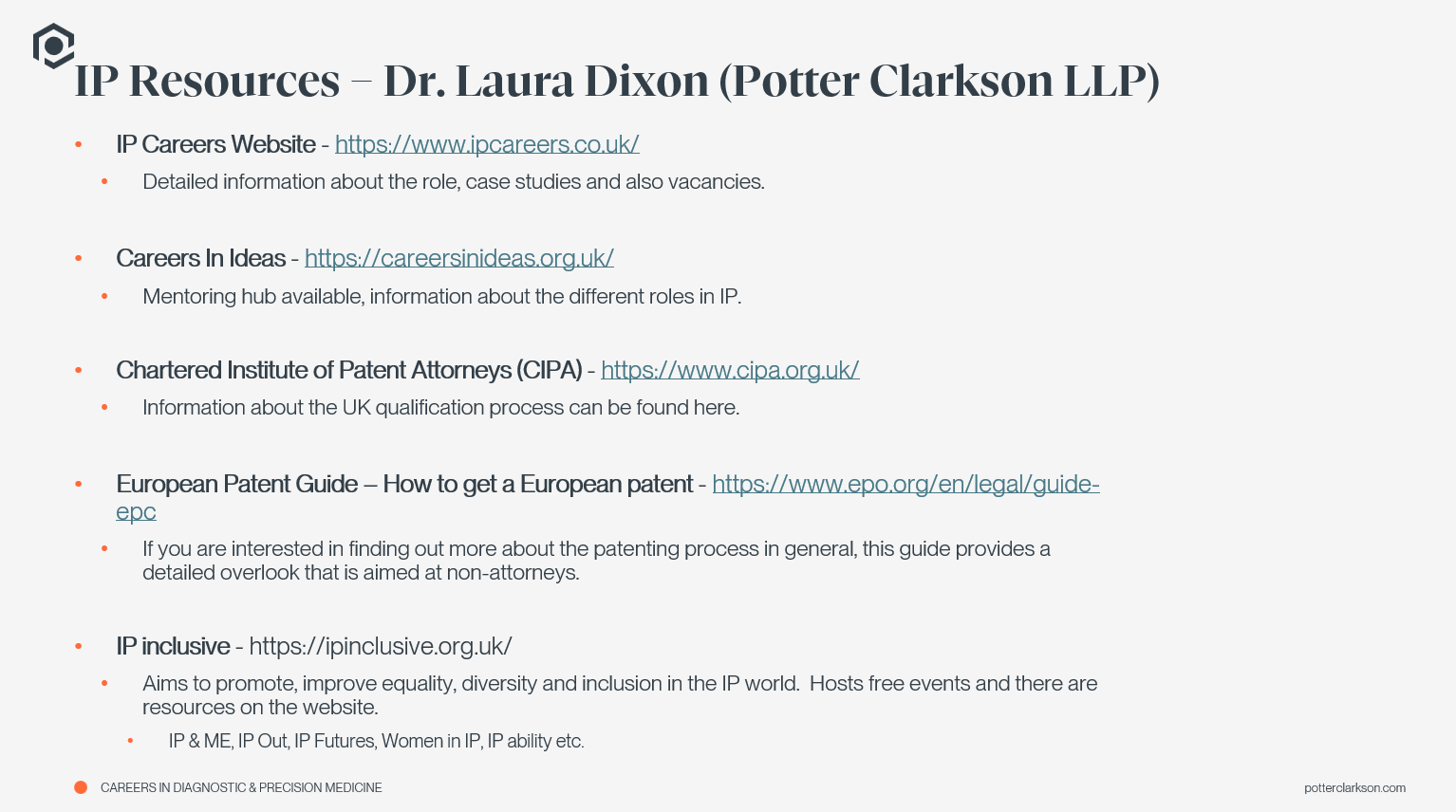
Laura Dixon — Patent Attorney, Potter Clarkson Laura moved from molecular biology into patent law, with a period working as a UK patent examiner along the way. She described the role as heavily analytical — evaluating and protecting intellectual property requires both scientific and legal literacy.
Caleb Bates — Head of IP, Isomorphic Labs Caleb studied chemistry and law, and now manages IP strategy at Isomorphic Labs, working closely with scientists and business teams. He outlined how in-house IP roles sit at the centre of a company’s innovation process, from early research through to commercialisation.
Takeaways from the session:
All four panellists returned to similar themes: network actively, stay curious, and don’t assume your career path is fixed by your degree subject. They encouraged early career scientists to seek out mentorship, engage with industry events, and pay attention to the transferable skills their scientific training gives them.